
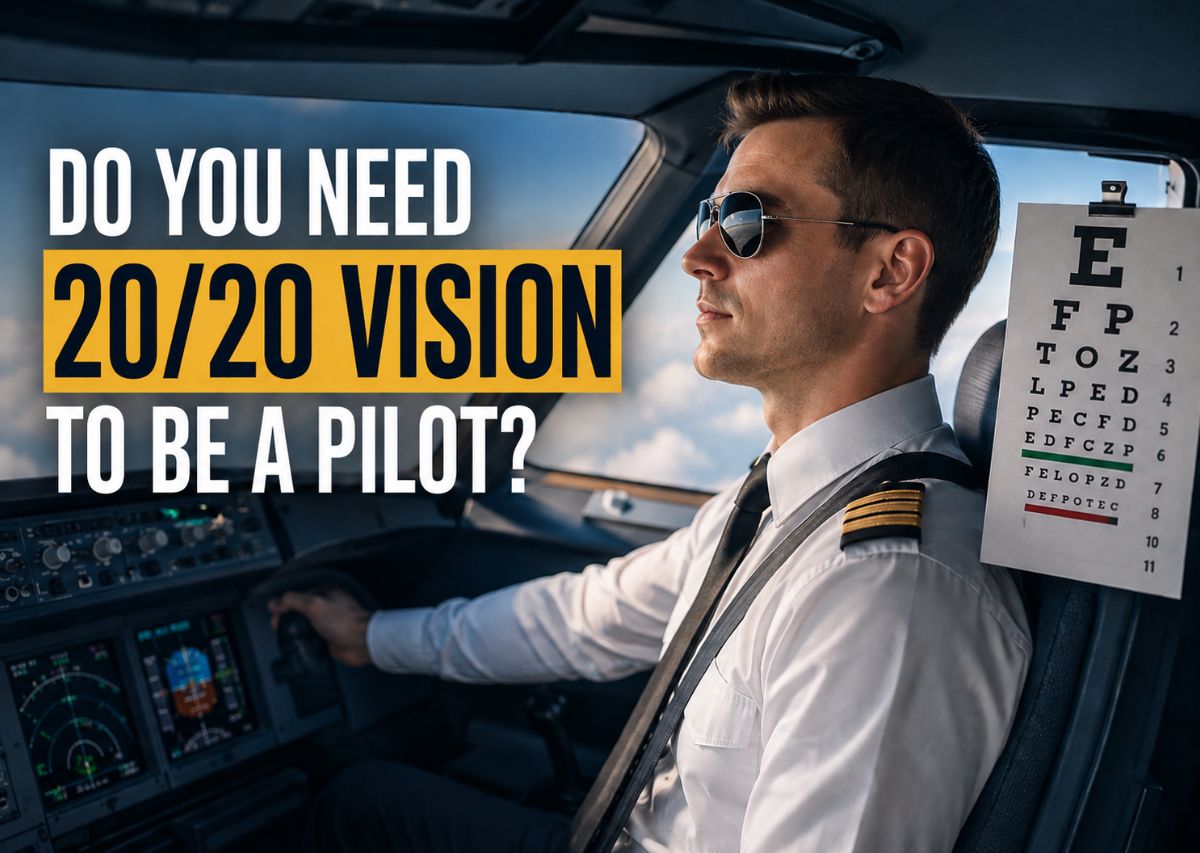
04 May Do You Need 20/20 Vision to Be a Pilot or Are Corrective Lenses Fine
Aspiring aviators often worry that their dreams of taking to the skies might be grounded by a less-than-perfect eye prescription. A very common question that surfaces during introductory flight consultations is: do you need 20/20 vision to be a pilot? Fortunately, the short answer is no, you do not need perfect uncorrected sight to command an aircraft.
Ignite your piloting future by dialing +1 850-983-9363 to book your foundational flight orientation with our expert instruction team now.
Inquire Now
Aviation regulatory bodies establish strict medical metrics to protect safety without completely disqualifying passionate students who use glasses. Understanding these specific visual baselines helps clear up long-standing misconceptions surrounding flight training enrollment processes. As long as your vision is fully correctable to required thresholds, your career path remains wide open for exploration.
The Difference Between Corrected and Uncorrected Sight
When evaluating medical eligibility, aviation examiners focus on your final corrected visual acuity rather than your raw uncorrected prescription. This means that if you wear contact lenses or standard glasses that bring your sight up to standard performance, you pass the test. The primary goal is ensuring operational clarity inside the cockpit.
Many successful commercial captains and private flight students wear corrective gear during daily operations. The medical certificate will simply feature a restriction stating that the holder must wear corrective lenses while utilizing flight privileges. This common administrative notation is a minor detail that does not restrict your career advancement.
Exploring FAA Medical Certificate Classes
Aviation authorities separate pilot medical clearances into three distinct categories based on operational duties. First-class certificates are mandatory for airline transport pilots commanding large commercial jets. Second-class clearances are required for commercial operators, including regional cargo haulers and specialized flight instructors executing daily training missions.
Third-class medical certificates are designed for private flyers navigating light sport or general aviation aircraft. Each category features slightly varying health benchmarks, but all accept the use of lenses. Knowing which certificate matches your flight goals allows you to plan your medical consultation with an authorized examiner effectively.
Distance Vision Standards Across Certificate Classes
For both first-class and second-class medical clearances, distance vision must be correctable to 20/20 or better in each eye separately. This standard ensures that professional pilots can easily identify distant air traffic, read distant runway markings, and navigate complex bad weather approaches safely. It is a benchmark for safety.
For a third-class medical certificate, the distance vision requirement is correctable to 20/40 or better in each eye. This slightly relaxed baseline makes general aviation highly accessible to hobbyists and weekend flyers. It ensures you maintain an appropriate field of safety while allowing for standard, non-perfect visual traits.
Near Vision Requirements for Cockpit Precision
Pilots must be able to read small font charts, monitor engine instruments, and input precise data into flight computers. Because of these essential detailed tasks, aviation medical exams place significant emphasis on near visual clarity. For all classes of certificates, near vision must be correctable to 20/40.
This assessment is typically performed by reading a standard testing card held at a distance of 16 inches from your eyes. As individuals age, natural changes can make reading fine text more challenging. Utilizing progressive lenses or bifocals is a perfectly legal way to meet this mandatory cockpit milestone.
The Significance of Complete Color Vision
- Aviation Light Signal Recognition: Pilots must accurately distinguish between red, green, and white flashes sent from control towers during radio failures.
- Cockpit Display Navigation: Modern digital glass cockpits utilize distinct color-coded displays to highlight critical terrain barriers and airspeeds.
- Airport Lighting Systems: Navigating taxiways requires identifying blue edge lights, green centerline markings, and white runway boundaries correctly.
- Weather Radar Interpretation: Identifying convective storm cells relies on recognizing shifting bands of green, yellow, and deep magenta radar signatures.
Navigating Intermediate Vision Standards for Electronics
Modern aircraft feature advanced instrument panels situated at an intermediate distance from the pilot seat. To ensure safety, first-class and second-class medical applicants over 50 years old must demonstrate clear intermediate vision. This benchmark requires correctable clarity to 20/40 at a distance of 32 inches.
This rule accommodates the natural visual shifts that manifest as aviators mature throughout their professional careers. Specially designed cockpit lenses can resolve any issues in this specific visual zone. It ensures you can monitor every digital screen and flight management system without straining your eyes.
The Role of Peripheral Vision in Flight Safety
Commanding an aircraft requires excellent spatial orientation and the ability to detect motion outside your direct line of sight. Examiners test your horizontal field of vision to verify that your peripheral perception is fully intact. You must present at least a 180-degree field of view to pass.
This wide field allows you to notice intersecting traffic while keeping your primary focus locked onto the runway ahead. A restriction in peripheral fields can compromise your overall situational awareness during busy airport traffic patterns. Maintaining this expansive lateral view is a foundational pillar of structural aviation safety.
Eye Conditions That Require Special Evaluation
While standard nearsightedness or farsightedness is easily managed, certain underlying ocular conditions demand deep medical review. Issues like glaucoma, macular degeneration, or severe cataracts can impact your long-term flight status. These conditions require comprehensive evaluations performed by specialized eye professionals before certification is granted.
If a condition is stable and does not compromise safety, authorities may issue a special issuance waiver. This administrative process permits pilots to continue flying while undergoing regular medical monitoring. It demonstrates that the aviation medical framework is adaptive and focused on enabling qualified individuals to fly.
Laser Eye Surgery and Aviation Compliance
Many aspiring aviators consider undergoing corrective laser eye surgery to eliminate their reliance on glasses entirely. Procedures like LASIK or PRK are fully accepted by aviation medical examiners, provided there are no surgical complications. You must allow your eyes to heal completely before seeking flight clearance.
Once your eye specialist verifies that your vision has stabilized without causing adverse side effects like night glares, you can report for an exam. Many pilots choose this path to experience the convenience of a lens-free cockpit. It is a highly popular, modern solution for meeting distance metrics.
Preparing for Your Pilot Medical Exam
Scheduling your initial aviation medical exam should be one of your very first steps when exploring flight training. If you already wear corrective lenses, bring your current glasses or backup contacts to the examiner’s office. This ensures you can complete the visual tracking modules without any delay.
Be open and completely transparent regarding your health history during the consultative interview. The examiner is there to guide you through the regulatory requirements and help you secure your status safely. Passing this medical assessment boosts your confidence as you begin your actual in-flight lessons.
Conclusion and Final Visual Summary
In summary, wondering whether you need 20/20 vision to be a pilot should never hold you back from pursuing your dreams. The modern aviation framework is designed to welcome individuals who utilize standard corrective methods to achieve structural clarity. Safety is the ultimate goal, and lenses are a proven path.
By maintaining your eye health and working with qualified medical examiners, you can secure your credentials easily. Keep your focus sharp, embrace the technical training modules, and look forward to your first solo flight. The horizon is wide open for those who possess the dedication to learn the language of flight.
Comprehensive Pilot Instruction Tailored to Your Flight Goals
Savannah Aviation has built a long heritage of excellence by training top-tier commercial and private aviators for decades. We provide comprehensive ground school, instrument ratings, and commercial flight courses tailored to your lifestyle. Our academy features an elite group of instructors focused on safety. Let us guide your journey into the skies today.
Start Flight Training
Contact: info@savannahaviation.com | +1 850-983-9363
Frequently Asked Questions
Do you need 20/20 vision to be a pilot if you use contacts?
No, you do not need 20/20 uncorrected sight to qualify for an aviation medical certificate. As long as your contact lenses or standard glasses correct your distance vision to the 20/20 benchmark for commercial work, you are fully eligible to pass the required physical exam parameters.
What happens if a pilot fails the color vision check?
If you exhibit difficulty passing the standard color plate test, you may undergo specialized operational evaluations. These checks include real-world tower light gun tests at the airfield. Successfully passing an alternative check permits you to fly without facing daytime operational limits.
Is peripheral vision checked during a flight medical exam?
Yes, examiners test your horizontal field of view to ensure you possess appropriate spatial awareness in the cockpit. Pilots must demonstrate at least a 180-degree visual field to ensure they can spot conflicting traffic nearby. This wide lateral perception is vital for safe airport operations.
Can I become a commercial pilot after having LASIK surgery?
Yes, laser eye surgeries like LASIK are fully accepted by aviation medical authorities for all certificate classes. You must wait until your eyes are completely healed and a specialist confirms your vision is stable. Once cleared, you can fly without needing standard corrective glasses.
How often do commercial pilots have their vision tested?
Airline captains holding a first-class medical certificate must undergo comprehensive physical exams every 6 to 12 months depending on their age bracket. These regular checks verify that distance and near visual acuity remain correctable to required thresholds for ongoing safety.
No Comments