
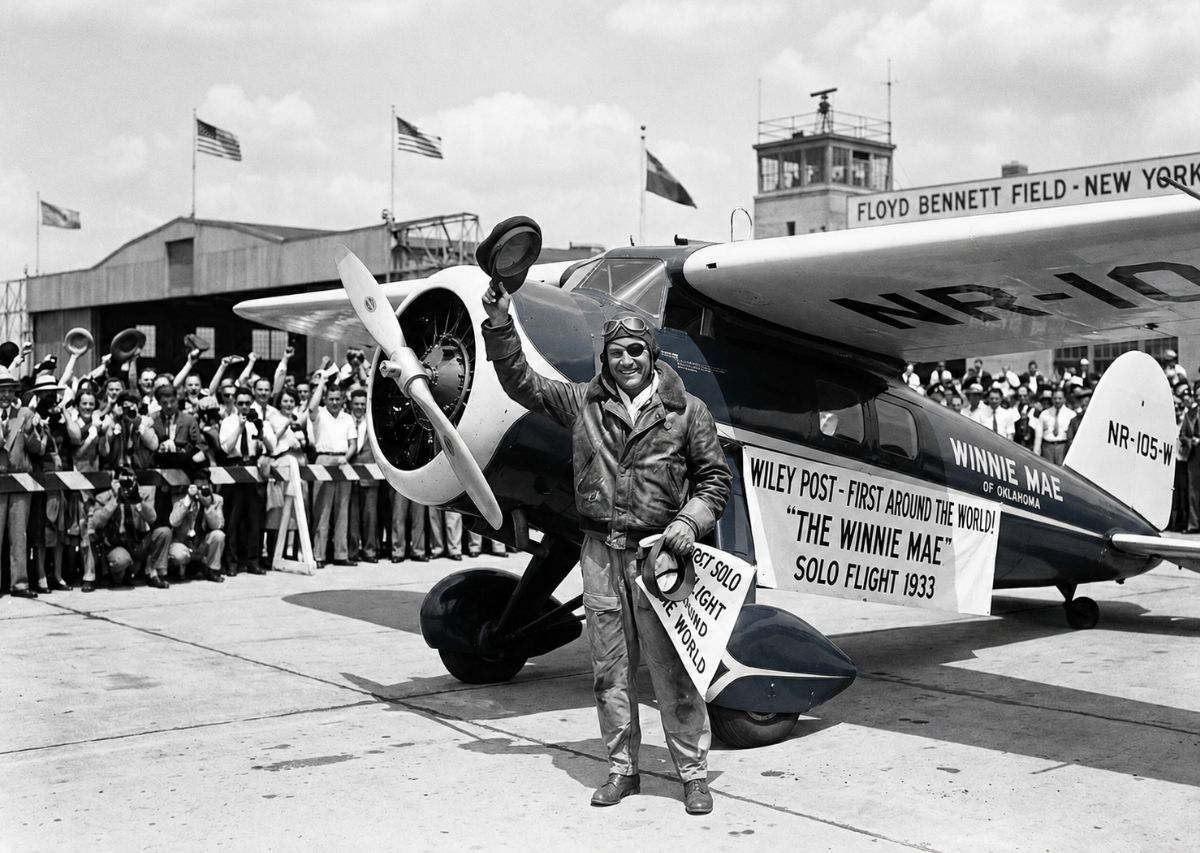
29 May Technical Triumphs of the First Person to Fly Around the World
The evolution of modern aerospace is defined by daring individuals who pushed beyond known boundaries to accomplish incredible global feats. For decades, historians and flight students have studied the magnificent achievements of the first person to fly around the world solo. This monumental achievement completely transformed international navigation standards and validated long-distance flight capabilities.
Elevate your global piloting ambitions by calling +1 850-983-9363 to book your advanced navigation ground school enrollment today.
Achieving global circumnavigation required a profound combination of mechanical innovation, personal endurance, and advanced meteorological tracking. Early aviators lacked the sophisticated digital flight management computers and satellite communication networks that modern pilots utilize daily. Instead, they relied heavily on physical flight instruments, paper maps, and raw piloting instincts to survive.
The Dawn of Global Aerial Circumnavigation
Long before an individual conquered the globe alone, a dedicated team of military aviators paved the way for international flight tracking. In 1924, the United States Army Air Service organized a historic mission utilizing 4 specialized Douglas World Cruiser open-cockpit biplanes to attempt the first global flight.
This monumental group voyage exposed the crew to extreme global climate shifts, intense logistical delays, and perilous engine overhauls in remote wilderness areas. Navigating through dense fog and unpredictable ocean storms demanded exceptional physical endurance and unmatched teamwork. Their ultimate success proved that global airways could be established safely.
Wiley Post and the Historic Solo Venture
In July 1933, a determined American aviator named Wiley Post secured his place in history as the first person to fly around the world solo. Operating a high-altitude Lockheed Vega monoplane named the Winnie Mae, Post embarked on a grueling journey that captured global attention and redefined human capability.
Post was already a highly celebrated aviator, having previously completed a global flight alongside a navigator in 1931. However, achieving this monumental feat entirely alone introduced unprecedented psychological and physical challenges that required absolute focus. His solo journey proved that a single pilot could manage complex global itineraries effectively.
Technical Specifications of the Winnie Mae
The aircraft utilized for this historic global flight was a masterpiece of early twentieth-century aerospace engineering and aerodynamic design. The Lockheed Vega featured a streamlined wooden fuselage, a powerful Pratt & Whitney Wasp radial engine, and customized internal fuel tanks to maximize operational range during long oceanic legs.
To optimize his high-altitude performance, Post modified the aircraft with an experimental supercharger and an early iteration of an autopilot system. During a particularly demanding transoceanic leg, the pilot maintained a steady cruising speed while logging 570 minutes of continuous flight through unstable atmospheric conditions without manual intervention.
Aerodynamic Endurance and Structural Flow Stability
- Laminar Performance Efficiency: The clean, unbraced wooden monoplane wing of the Lockheed Vega optimized laminar airflow, dramatically reducing parasite drag over open oceans.
- Turbulent Wake Mitigation: Post carefully managed his angle of attack during heavy storm encounters to prevent high-altitude flow separation along the wing profile.
- Propulsion Management: The custom engine cowling redirected airflow around the hot cylinders, maximizing thermodynamic cooling efficiency across multi-hour legs.
- Pitch and Trim Corrections: Without continuous mechanical adjustment, slight variations in fuel weight could alter airframe balance, requiring precise control responses to avoid sudden stalls.
Navigating Without Modern Avionic Systems
Undertaking a global flight in the 1930s required master-level proficiency in dead reckoning and celestial navigation techniques. Post could not rely on modern global positioning systems, digital ground tracking radars, or automated weather updates to guide his flight path. Every single navigation calculation had to be performed manually using physical charts.
The absence of real-time air traffic control coordination meant that the pilot was completely isolated once the wheels left the runway. Post had to read shifting cloud formations and interpret sudden barometric pressure drops to anticipate severe weather patterns ahead. This intense operational environment demanded total situational awareness and absolute calm.
Overcoming Extreme Sensory Deprivation and Fatigue
Managing extreme physical exhaustion was one of the most critical hurdles faced by the first person to fly around the world solo. To combat sleep deprivation during the multi-day journey, Post trained himself to operate under strict, irregular rest cycles for months leading up to the historic departure date.
Sitting inside a cramped, loud cockpit for hours on end induced severe sensory fatigue and spatial disorientation risks. The continuous vibration of the radial engine and the lack of external visual references over vast oceans tested his mental resilience. Post relied on meticulous instrument cross-checking habits to maintain stable aircraft control.
The Global Flight Route and Logistical Stops
The carefully planned flight trajectory originated in New York and stretched across the vast North Atlantic Ocean toward Europe. Post coordinated strategic refueling stops in Germany, Russia, Alaska, and Canada before returning triumphantly to his starting destination. Each stop required extensive international ground support coordination and fuel availability management.
Landing on unpaved runways and remote dirt airfields presented continuous structural risks for the aircraft’s rigid landing gear assembly. In several regional stations, local mechanics worked frantically alongside Post to inspect the engine components and patch minor fuselage damage. These rapid field repairs were vital for maintaining his tight itinerary.
Introducing Experimental Substructure Innovations
Post’s historic global voyage served as an active testing ground for several groundbreaking aerospace technologies that protect modern pilots today. He was a passionate pioneer of high-altitude flight, later developing an early iteration of a pressurized suit to enable exploration of the stratosphere. His research unlocked new operational envelopes for aviation.
The data collected during his solo circumnavigation provided valuable insights into engine performance, fuel efficiency, and human physiology under prolonged stress. Aeronautical engineers studied his flight records to improve structural airframe designs and refine instrument layouts. His bold experimentation accelerated the transition toward modern commercial high-altitude transportation.
The Psychological Elements of Solo Aviation
Flying entirely alone across vast unmapped wilderness areas and deep oceans requires a unique psychological constitution and absolute self-reliance. Without a co-pilot or flight engineer to share the operational workload, the solitary aviator must execute every single emergency checklist independently. Panic or hesitation in the cockpit could result in immediate catastrophe.
Post possessed a legendary level of emotional composure that allowed him to overcome unexpected mechanical failures without losing focus. When his radio communication system failed over remote territories, he maintained a steady heading using basic compass orientation. This psychological resilience remains a core trait taught in modern crew resource management modules.
Impact on Modern Flight Training Methodologies
Modern flight academies continue to draw inspiration from early aviation pioneers when structuring comprehensive private and commercial pilot courses. The foundational principles of thorough pre-flight planning, meticulous weather analysis, and disciplined risk management are rooted in historical long-distance voyages. Studying past achievements builds exceptional professional pilot competency.
Understanding how early aviators solved complex logistical and mechanical challenges teaches student pilots to respect regulatory frameworks and safety boundaries. Every single lesson logged in a modern trainer reinforces the core habits of vigilance and precision that pioneers practiced. Historical aviation knowledge elevates your overall cockpit situational awareness.
Evolution of Transoceanic Flight Planning
The successful global transit executed by Post drastically altered how military and civil aviation organizations approached long-range flight planning. It demonstrated that single-engine aircraft possessed the structural reliability to conquer vast oceanic tracks if maintained properly. This realization inspired airlines to develop regular international transoceanic passenger flight routes.
Today, pilots navigating identical global routes utilize advanced satellite communication networks, real-time meteorological radar feeds, and redundant dual-engine systems. The extreme hazards that once threatened early pioneers have been systematically mitigated through decades of technical innovation. However, the core operational requirement for precision navigation remains completely unchanged.
Cultural Significance and Inspiring Generations
The triumphant return of the Winnie Mae to New York sparked massive public celebrations and solidified Post’s status as a global icon. His achievement demonstrated that human determination, paired with calculated engineering innovation, could conquer the most daunting physical barriers on earth. He inspired thousands of young individuals to pursue aviation careers.
Beyond the immediate fame, Post’s legacy continues to remind modern aviators that the horizon is always worth exploring through structured education. His contributions to high-altitude flight suits and autopilot systems laid the groundwork for contemporary commercial aviation and space exploration. He remains a truly shining symbol of aviation excellence.
Core Lessons in Aeronautical Risk Management
Analyzing the structural choices and operational decisions made during historical global flights provides an excellent framework for modern safety courses. Post never prioritized speed over calculated risk management, frequently delaying departures to wait for more favorable wind matrices. This disciplined approach is a cornerstone of professional command pilot behavior.
Student pilots learn that managing a flight emergency requires maintaining complete emotional control and executing memorized procedures systematically. By studying the detailed logs of early circumnavigators, modern students develop a deeper appreciation for checklist discipline and fuel monitoring accuracy. These historical insights help prevent human error accidents in the cockpit today.
Chronology of Global Aviation Milestones
The timeline of global aerial circumnavigation reflects a continuous drive toward greater speed, efficiency, and safety boundaries. Following Post’s solo flight, subsequent aviators sought to break records using multi-engine transport aircraft and eventually advanced jet propulsion systems. Each successful global voyage expanded our collective understanding of global atmospheric patterns.
Today, commercial airliners complete global circumnavigations daily, carrying hundreds of passengers in complete pressurized comfort across continents. This seamless modern connectivity is the direct result of the brave experimentation conducted by early single-pilot operators. Honoring these roots is a vital component of a comprehensive aeronautical education.
Continuous Education for Contemporary Pilots
As the aviation industry moves toward alternative propulsion systems and autonomous flight concepts, the spirit of early pioneering remains vital. Command pilots must continue to pursue educational excellence, adapt to changing technological systems, and maintain absolute safety standards. Lifelong learning ensures your ongoing marketability and competence inside the cockpit.
Whether you are practicing basic steep turns or planning a complex multi-state cross-country flight, remember the dedication of early aviators. Investing in high-quality flight instruction and structured ground school courses positions you for a successful future in the skies. Let professional guidance turn your aviation dreams into a reality.
Cultivating Excellence in Your Flight Journey
The journey toward earning your official private or commercial pilot credentials demands extensive dedication, structured study, and a trustworthy academy partner. By matching your passion with professional instruction, you develop the elite technical skills required to navigate complex airspaces safely. True piloting competence is built through disciplined daily practice.
As you take the controls and look out toward the open horizon, remember the pioneers who carved out global air pathways. Commit yourself to safety mastery, maintain your records meticulously, and celebrate the incredible privilege of flight. Your personal aviation story begins with a single calculated step into the classroom.
Comprehensive Flight Instruction Formulated for Pioneering Pilots
Savannah Aviation has built a rich history of training top-tier aviators for decades. We provide private pilot courses, instrument ratings, and advanced global cross-country logistics modules. Our academy uses a unique precision mentoring structure to maximize your safety. Let us guide your personal pioneering journey across the open skies today.
Contact: info@savannahaviation.com | +1 850-983-9363
Frequently Asked Questions
Who was the first person to fly around the world solo?
Wiley Post was the first person to complete a solo flight around the globe in July 1933. He operated a modified Lockheed Vega named the Winnie Mae. Post completed the tough journey entirely alone, proving that disciplined solo long-distance flight was operationally viable for all future aerospace pilots.
What aircraft was used by the first person to fly around the world solo?
Wiley Post utilized a highly specialized Lockheed Vega monoplane named the Winnie Mae to achieve his historic global voyage. The aircraft was engineered with a streamlined wooden fuselage and a powerful radial engine, which Post modified with an experimental autopilot system to maintain continuous spatial stability.
How long did the first solo global flight take to complete?
Wiley Post completed his historic solo circumnavigation in exactly 7 days, 18 hours, and 49 minutes during July 1933. This remarkable historical timeline smashed previous group records and clearly demonstrated that advanced pre-flight preparation could optimize transit efficiency for aircrews.
What navigation tools were used during the first solo global flight?
Post relied on traditional dead reckoning and celestial navigation because modern electronic instruments did not exist. He utilized a precise drift indicator, a customized compass, and an early mechanical autopilot system to maintain his heading over vast oceans when tracking visual reference points on earth was completely impossible.
Why are historical global flights studied in modern flight academies?
Studying early circumnavigations teaches modern student pilots about extreme risk management, detailed pre-flight planning, and cockpit resourcefulness. Pioneers like Post demonstrated how human endurance and systematic navigation are vital for flight safety, establishing foundational safety standards that continue to govern corporate and general aviation networks worldwide.
No Comments