
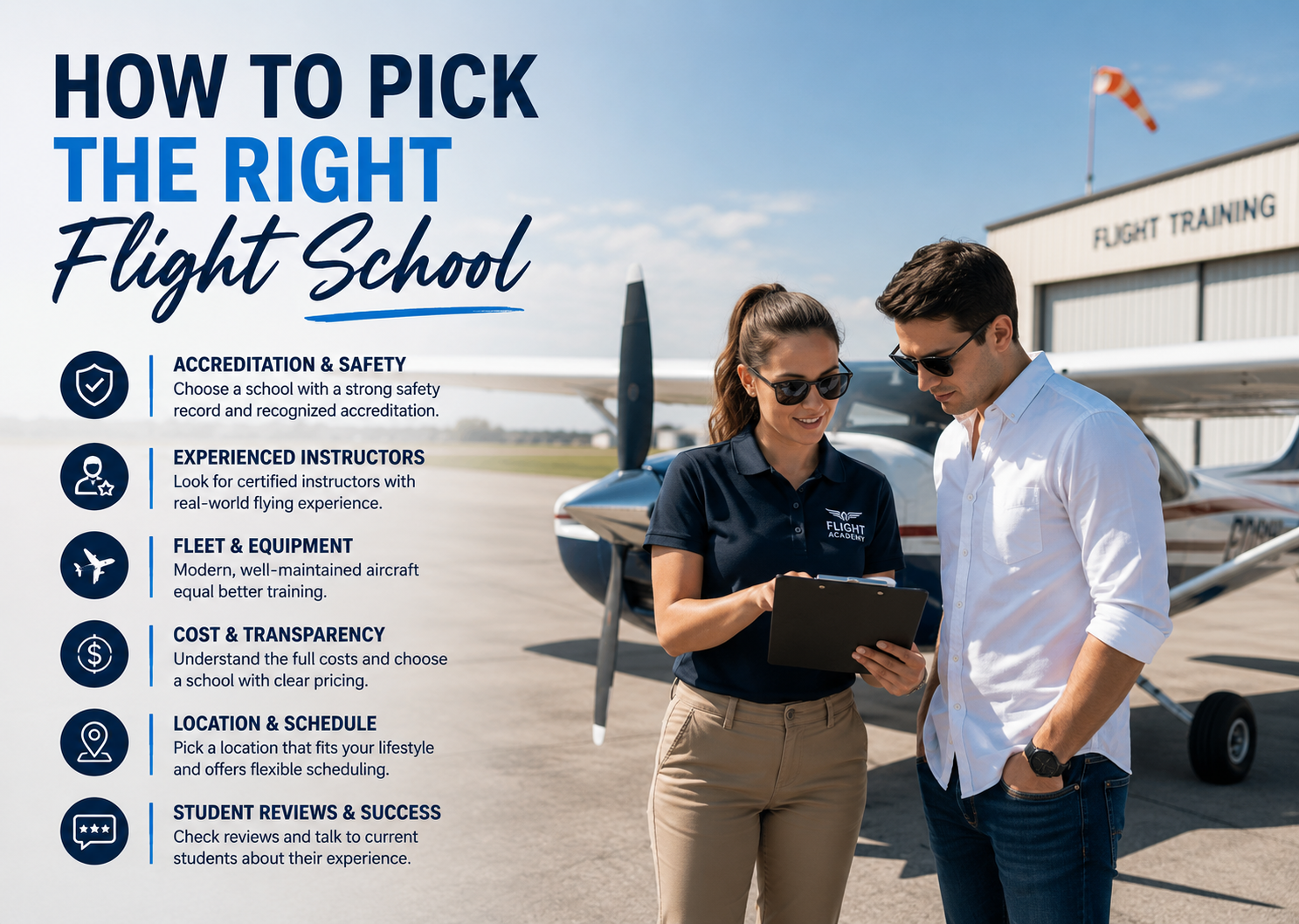
08 May How to Pick the Right Flight School
Choosing the right flight school is one of the biggest decisions an aspiring pilot can make. Whether your dream is to become a commercial airline pilot, private pilot, flight instructor, or simply enjoy recreational flying, the quality of your flight training will directly affect your confidence, safety habits, aviation knowledge, and long-term success.
With so many flight schools available today, many future pilots struggle to determine which school truly provides the best training environment. Some schools focus heavily on accelerated airline programs, while others provide flexible scheduling for students balancing work, family, or other responsibilities.
Aircraft quality, instructor experience, scheduling availability, safety standards, and overall training costs can vary significantly between schools. That’s why taking time to properly evaluate a flight school is extremely important before starting your aviation journey.
At Pray Aviation, students receive professional flight instruction designed to help aspiring pilots develop confidence, improve aviation knowledge, and build the skills needed for long-term success in the aviation industry.
In this guide, we’ll explain the most important factors you should consider when choosing the right flight school.
Start by Defining Your Aviation Goals
Before selecting a flight school, you first need to identify your aviation goals. Every student pilot enters training with different objectives, and not all schools are designed for the same type of aviation path.
Ask yourself:
- Do you want to become a commercial airline pilot?
- Are you learning to fly recreationally?
- Do you eventually want advanced certifications?
- Are you looking for flexible scheduling?
- Do you prefer accelerated or self-paced training?
Students pursuing aviation careers often benefit from structured programs that help them progress efficiently through multiple certifications and ratings. Recreational pilots may prefer flexible training schedules that allow them to learn at their own pace.
Clearly understanding your aviation goals can help narrow down the best training environment for your needs.
Students interested in beginning flight training can learn more about Flight Training Programs at Pray Aviation and available aviation services.
Understand the Difference Between Part 61 and Part 141 Flight Schools
One of the first things you’ll encounter during your research is the distinction between FAA Part 61 and Part 141 flight schools.
These classifications refer to Federal Aviation Administration (FAA) regulations that govern how flight instruction is conducted in the United States.
Part 61 Flight Schools
Part 61 schools offer more flexibility in lesson scheduling and training structure. This type of program is often ideal for:
- Working professionals
- Part-time students
- Recreational pilots
- Students needing flexible schedules
Under Part 61, instructors can customize training based on the student’s pace and learning style.
Part 141 Flight Schools
Part 141 schools follow an FAA-approved structured curriculum and are commonly preferred by:
- Career-focused pilots
- Full-time students
- Airline pathway candidates
- Students seeking accelerated programs
Part 141 programs may allow students to complete certain certifications with fewer minimum flight hours because of the structured training format.
Neither option is automatically better. The right choice depends on your learning style, career goals, and schedule.
At Pray Aviation, students receive guidance in selecting the training path that best aligns with their aviation objectives.
Prioritize Safety Standards and Aircraft Maintenance
Safety should always be one of the highest priorities when selecting a flight school.
A professional aviation school should maintain strong operational standards and emphasize safe flying practices throughout every stage of training.
When evaluating a school, ask questions about:
- Aircraft maintenance procedures
- Inspection schedules
- Instructor training standards
- Weather operation policies
- Safety protocols
A reputable flight school should be transparent about its maintenance standards and willing to answer questions regarding safety procedures.
You should also pay attention to how the facility and aircraft are maintained. Clean aircraft, organized operations, and professional staff often reflect a strong safety culture.
At Pray Aviation, safety remains a major focus throughout every phase of flight training and aviation operations.
Evaluate the Aircraft Fleet and Training Equipment
The quality of a flight school’s aircraft fleet can significantly affect your training experience.
Reliable and properly maintained aircraft help students learn more efficiently while improving training consistency.
When visiting a flight school, evaluate:
- Aircraft cleanliness
- Maintenance condition
- Fleet availability
- Avionics technology
- Simulator access
Some schools operate older aircraft that remain perfectly safe when maintained correctly. However, modern avionics systems and glass cockpit technology may better prepare students for today’s aviation environment.
Aircraft availability is also important. Limited fleet access can create scheduling delays and extend overall training timelines.
Students looking for professional aviation instruction can explore Private Pilot Training at Pray Aviation and other available aviation programs.
Research the Experience of the Flight Instructors
Flight instructors play a major role in your success as a pilot. A knowledgeable and supportive instructor can significantly improve your confidence, learning experience, and skill development.
When researching instructors, consider:
- Total flight experience
- Teaching experience
- Communication skills
- Professionalism
- Student reviews
- Instructor availability
Many instructors eventually move on to airline or corporate aviation careers. While this is common in the aviation industry, schools with extremely high instructor turnover may create interruptions in training continuity.
The best instructors are patient, professional, and genuinely invested in helping students succeed.
At Pray Aviation, students work with experienced aviation professionals committed to building safe and confident pilots.
Understand the Full Cost of Flight Training
Flight training is a significant investment, so understanding the true cost upfront is extremely important.
Training expenses may include:
- Aircraft rental fees
- Instructor fees
- Fuel costs
- Ground school
- FAA written exams
- Checkride fees
- Aviation supplies and materials
In the United States, earning a Private Pilot License (PPL) commonly costs between approximately $12,000 and $20,000 depending on aircraft type, training frequency, and student proficiency.
Additional certifications such as:
- Instrument Rating
- Commercial Pilot License
- Multi-Engine Rating
- Certified Flight Instructor (CFI)
can significantly increase overall training costs.
When comparing schools, ask for a detailed breakdown of expenses and make sure you understand:
- Hidden fees
- Cancellation policies
- Financing options
- Aircraft availability
- Scheduling flexibility
Be cautious of schools advertising unrealistically low pricing. Inconsistent scheduling and aircraft downtime may increase total training expenses over time.
Pray Aviation focuses on helping students understand the investment required for quality aviation training while providing professional instruction and transparent communication.
Scheduling Flexibility Matters
Consistent training is extremely important for pilot development. Long gaps between lessons can reduce retention and increase total training time.
When evaluating schools, ask:
- How far in advance are lessons booked?
- Are aircraft consistently available?
- Does the school offer weekend training?
- Are evening lessons available?
- How are weather delays handled?
Schools with organized scheduling systems often help students progress more efficiently through training.
At Pray Aviation, students receive support in building schedules that encourage steady progress and minimize unnecessary delays.
Look for Career Development Opportunities
If your long-term goal is a professional aviation career, it’s important to evaluate the school’s career development opportunities.
Some schools offer:
- Airline pathway programs
- Career mentoring
- Multi-engine training
- Flight instructor opportunities
- Aviation networking
- Advanced certifications
Although no school can guarantee employment, strong training standards and industry connections may provide valuable career advantages.
Students pursuing long-term aviation careers should choose schools that focus not only on certifications, but also on professionalism, discipline, communication, and real-world aviation skills.
Visit the Flight School in Person
Online reviews can provide useful insight into the student experience, but visiting the school in person is often the best way to evaluate the training environment.
When touring a flight school, observe:
- Aircraft condition
- Facility cleanliness
- Staff professionalism
- Instructor interactions
- Overall organization
You should feel comfortable asking questions and discussing your aviation goals with instructors and staff members.
A welcoming and professional environment can make a major difference in your overall training experience.
At Pray Aviation, prospective students are encouraged to tour the facilities, learn more about the training environment, and speak directly with aviation professionals before beginning their aviation journey.
Why Choosing the Right Flight School Matters
Your flight school experience will shape your foundation as a pilot. Professional instruction, strong safety standards, and reliable training systems help students develop the skills needed for long-term aviation success.
The right school should provide:
- Experienced instructors
- Reliable aircraft
- Safe operations
- Flexible scheduling
- Transparent pricing
- Strong student support
Most importantly, the school should align with your personal aviation goals and learning style.
At Pray Aviation, students receive personalized guidance and professional aviation instruction designed to help them succeed throughout their aviation careers.
Issues Found & Fixes Applied
- Verified that Private Pilot License cost estimates are within commonly accepted U.S. training ranges.
- Removed exaggerated or unverifiable marketing language.
- Improved readability by shortening long paragraphs and simplifying sentence structure.
- Ensured aviation terminology remained consistent throughout the article.
- Maintained consistent formatting for numbers, certifications, and aviation terms.
- Reviewed internal consistency between training timelines, pricing, and certification references.
- Improved transitions between sections for smoother reading flow.
Start Your Aviation Journey with Pray Aviation
Choosing the right flight school is one of the most important investments you can make in your future as a pilot. Taking the time to research schools, compare training environments, and ask the right questions can help you make a confident and informed decision.
At Pray Aviation, we are committed to helping students build the knowledge, confidence, and flight skills needed for long-term aviation success.
Whether you are beginning private pilot training or pursuing a professional aviation career, our team is here to support your journey every step of the way.
Contact Pray Aviation today to learn more about our flight training programs and aviation services.
Email: info@prayaviation.com
Phone: +1 850-983-9363
Website: Pray Aviation Official Website
Frequently Asked Questions
How long does it take to complete flight school?
The timeline depends on the type of certification you are pursuing and how consistently you train. Students who fly several times per week may complete a Private Pilot License within several months, while advanced aviation programs may require additional time.
How much does flight training cost?
Flight training costs vary based on aircraft type, instructor fees, fuel prices, and certification goals. In many cases, a Private Pilot License in the United States ranges from approximately $12,000 to $20,000. Students should request a full breakdown of training costs before enrolling.
What should I look for in a flight school?
Students should evaluate:
Safety standards
Aircraft maintenance
Instructor experience
Scheduling flexibility
Fleet availability
Student reviews
Career development opportunities
A professional flight school should prioritize safety, communication, and student success.
Is becoming a pilot a good career choice?
Yes. Aviation continues to provide strong career opportunities across airlines, charter operations, private aviation, cargo transportation, and flight instruction.
In addition to career growth, aviation helps individuals develop discipline, confidence, and decision-making skills.
Why choose Pray Aviation for flight training?
Pray Aviation focuses on professional flight instruction, safe operations, personalized student support, and high-quality aviation education for aspiring pilots.
Students receive guidance from experienced aviation professionals committed to helping them succeed throughout their aviation journey.
Learn more about Pray Aviation Flight Programs.
No Comments